

PCD (Polycrystalline Diamond) cutting toolsare popular in high-end precision machinery manufacturing, such as new energyvehicle three electric systems and aerospace composite material processing, dueto their extremely high hardness and wear resistance. However, the"double-layer composite structure" of PCD diamond layer and hardalloy substrate also poses great technical challenges for positioning holemachining. High end manufacturing factories in Germany and Europe have verystrict requirements for the aperture tolerance (≤±0.01), roundness (± 0.005), and micro heat affectedzone (HAZ) of positioning holes.
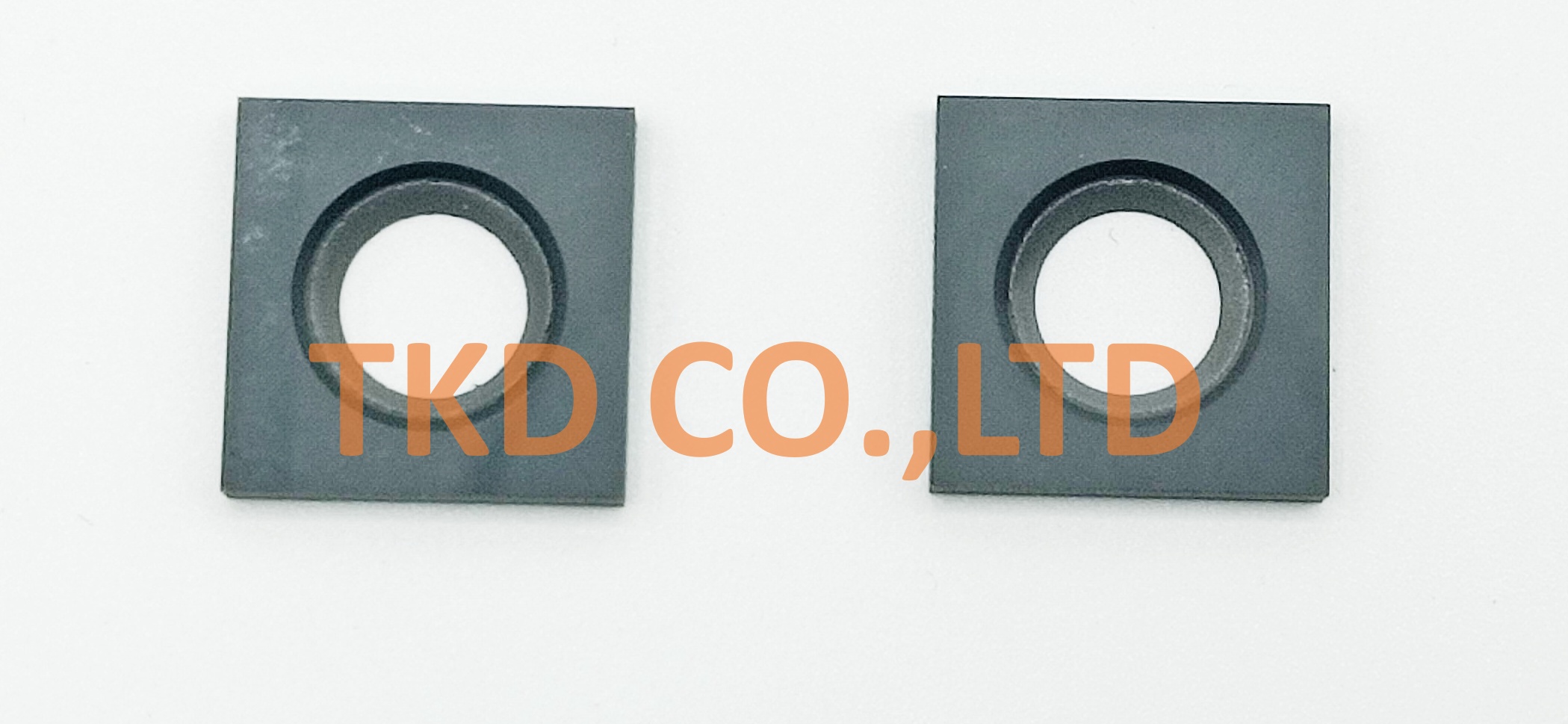
In response to the characteristics of PCDmaterials such as superhard wear resistance, high brittleness, and multiphasestructure, the industry currently mainly adopts the following three processroutes for processing. The quantitative performance comparison of each schemeis as follows:
Comparison Table of Key TechnicalParameters for PCD Positioning Hole Machining:
Machining Method | Dimension Accuracy (mm) | Surface Roughness Ra (μm) | Material Removal Rate (mm3/min) | Applicable Hole Diameter Range (mm) | Core Engineering Advantages & Process Bottlenecks |
Laser Machining | ±0.005 | 0.3−0.8 | 0.8−1.5 | Φ0.1−Φ5.0 | Pros: Non-contact "cold ablation" mechanism eliminates thermal stress; single-step drilling; universal material compatibility . Cons: Demands dynamic focal length compensation to prevent hole taper. |
EDM / Wire Cut | ±0.008 | 0.2−0.5 | 0.03−0.08 | Φ0.05−Φ3.0 | Pros: Renders a surface free of micro-cracks; excellent roundness and concentricity . Cons: Slow cycle times; strictly limited to conductive materials; severe electrode wear. |
Ultrasonic Machining(Rot | ±0.020 | 0.5−1.2 | 0.01−0.03 | Φ0.5−Φ10.0 | Pros:No thermal degradation . Cons: Substantially low throughput and precision; incapable of processing complex micro-geometries. |
A. Fine positioning hole
1) Main process flow: Industrialnanosecond laser(1064 ) processing combined with coaxial image positioningprocessing.
2) Key points of the process: Usea gas protective cover to prevent slag from adhering to the hole wall, reducingand assisting external factors. Adopting micro scanning method for layer bylayer scanning, and then optimizing the process through a round of laserdrilling to achieve process integration chamfering. This can not only preventcorner radius, but also increase the corner radius of micro parts clamped bythe blade edge.
B. Deep hole batch processing (H/D>8:1)
1) Production solution: Laserdrilling combined with EDM sinking machining.
2) Key process points: Use laserfor rough machining. After drilling in the center, about 0.05mm of processingspace is reserved. The final dimensions are machined using a high-speed coppertungsten wire EDM center. This scheme comprehensively considers the advantagesof efficient laser and micro electrical discharge machining of fine pores,achieving HAZ=0.
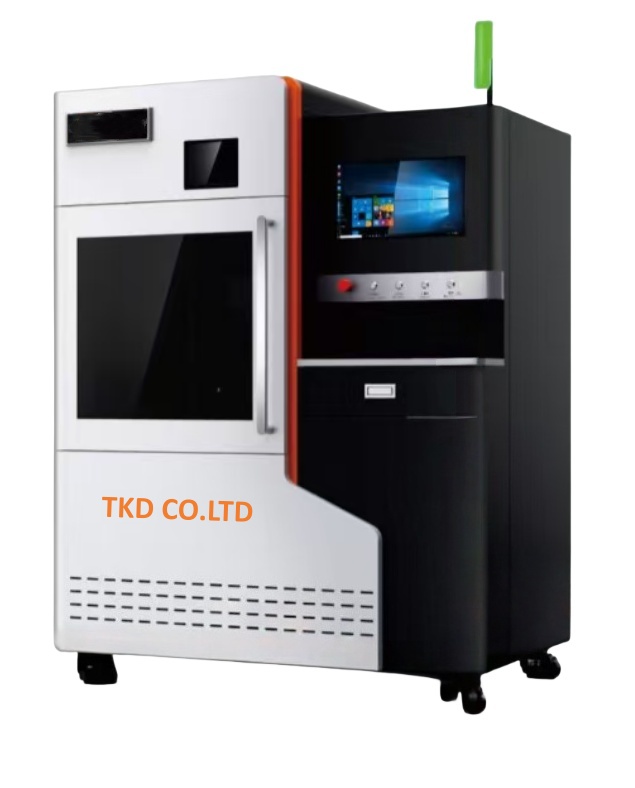
TKD CO., LTD has launched a new generationof industrial grade precision fiber laser engraving machine to meet the demandfor 3D precision machining of rotatable blades and non-standard shaped parts.This device integrates high flexibility, high efficiency, and intelligence,making it an ideal choice for the transformation and upgrading of superhardtool manufacturing plants.
Core technical parameters of TKD precision laser engraving machine
Machine Module | Technical Configuration & Engineering | Applied Industrial Value |
3D Digital Galvo Scanner | Automatic 3D slice rendering; supports multi-layer deep engraving | Enables monolithic, single-setup profiling of chip breakers and 3D complex curved geometries. |
Machine Vision & Focusing | High-definition coaxial vision tracking and real-time auto-focus | Micron-level alignment accuracy; drastically minimizes scrap rates during high-mix production. |
Motion & Automation Rig | Ultra-precision X, Y linear slide stages and integrated automatic part loader | Engineered for 24/7 lights-out manufacturing; features native connectivity for MES system integration. |
Material Versatility | Fully compatible with PCD, PCBN, CVD diamond, advanced ceramics, tungsten carbide, and hardened steel | Universal material processing capability; masterfully handles everything from chip breaker engraving to thin-substrate laser cutting. |
Why choose TKD laser solution?
1) Breaking through conductivitylimitations: Traditional electrical machining cannot cope with non-conductiveceramics and low cobalt PCD. TKD laser equipment uses non-contact high-energybeam ablation to easily overcome the bottleneck of all material processing.
2) In line with Germany/Europe'sgreen environmental protection indicators: no mechanical wear throughout theprocess, no need to consume cutting fluid or spark oil, no wastewater or wasteresidue pollution, helping enterprises pass strict green factory and carbonfootprint certifications.
3) Extremely high return oninvestment (ROI): Compressing the traditional processing steps that often taketens of minutes to seconds, significantly reducing the cost of single pieceprocessing, and helping your products enter the international high-end supplychain.
==========FAQ==========